Friday, 8 March 2013

Why do kids hate school?


It is a fact that since the beginning of time, most of us, students, hate school. It is boring, useless, and we just don't like it! Every single student in High School wishes nap time was still in their schedules. We get up early every morning to be dragged to a place that for many of us is just a big waste of time. But what is it that makes school so tedious for us? In my experience as a student, it is because we just don't see the point in it! Learning about the Han Dynasty in ancient China is not going to make me CEO for Apple, so why bother? We don't know the reason for learning everything we are supposed to learn. I lost count of how many times I heard my classmates asking, "fine, and when will I ever use this knowledge in my life?" Personally, I like school, and learning in general, but that depends very much on the subject, the teacher, and the way I am being taught. Nobody likes to just sit and listen to someone talking about a topic you are not interested in all day long, and that is how most classes are. We want to participate, debate, have our questions answered and be taken seriously by our teachers. We want to be stimulated to learn, and talk about topics that are interesting, and that will actually help us later on in life. 

 
I have always liked History, but it wasn't until recently that I found out how much I could enjoy reading about it, because I did it when I was not told to. The same thing with Science. There are so many fascinating things in the world, that are basically the same things we study at school, so why when we do it on our own it seems so much more interesting? Because we are doing it in an interesting way. Everyone is curious about the world what surrounds us it; is a natural human characteristic. But the way we are supposed to sit, listen, take notes and go home makes it seem boring. So the curiosity is there, but how do you make students interested in what they need to learn? 

"‪At the heart of good history is a naughty little secret: good storytelling." Stephen Schiff. ‬

Well, in my opinion, you can get almost anyone interested in almost anything if you present it in an interesting way. Classes that are more dynamic are more stimulating and interesting.

That is a something that can be seen through all of our educational system. This system that is used today was created so long ago, and the world has changed a lot since then, that it just doesn't fit it anymore. We now have access to every single piece of knowledge on Earth with the Internet. We have a much more globalized view of the world now than our grandparents, or even parents, did. We can use that to our advantage in school. But globalization also has a bad side. We have so many different things stimulating us, calling out for our attention, that it takes an extra good storytelling skill to keep us focused. 

Not only about technology, but the role of education has changed. Nowadays the importance of having a university degree when applying for a job is being discussed, and formal education does not mean as much as it did 20 years ago. That only encourages more students to drop out of school and focus their time on things that will help them specifically in the fields they want to work in. That is odd, because preparing children to live in the "real" world, and giving them the knowledge and the tools to succeed is the very purpose of school. So as the educational system remained the same, schools are no longer serving their purposes. 

I like this video because he expresses insatisfaction with the way colleges are, not the very idea of education. I also like his family tree analogy, where that is made clear, and how he knows that school puts us "in the box", not education. 


So how can the educational system change to the point where it adapts to today's world, within borders so that it keeps its purpose? We have studied many attempts. I personally don't agree with some of the radical views such as, "let's get rid of all the teachers!" but I do think that we should get rid of the way teachers are teaching us. As I wrote before, nobody wants to sit and listen to someone talking the whole day, so the perfect classroom, in my opinion, should be one where the students bring up their interests. I like the idea of a teacher to introduce students to a subject, but, as students gain a more profound understanding of that subject, they should "take over" the class, with the teacher to guide them through more complex concepts. Another radical view I don't agree with is the one where we get rid of regular subjects. They do exist for a reason, and they help us in understanding the world around us. Everybody should have a basic understanding of how the world works and exposure to all subjects will give the student a sense of what they are better at, so when it comes to a point where they have to choose what they want to do in life, they will know what to focus on. But there comes a point where students would benefit much more from subjects they are more interested in. For me, an ideal schedule would be regular classes in the morning (classrooms like I described above) and during the afternoon students could work on individual projects. The regular classes could also include more electives. Basically, the students would make most of their schedule. 

I also like the idea of small classrooms. Keeping them small makes things more interesting for the student, who feels like their questions matter, as it also facilitates for the teachers, who can more easily control the class, and can give more individual attention to each student. 


Another thing that makes kids hate school is that many times we don't feel important, or as if our teachers don't take us seriously. I understand that teaching is exhausting many times, and that it is not easy dealing with students, especially teenagers, but, as I wrote above, I think small classrooms are a great way of solving at least a part of that problem. Giving students more freedom (when they are mature enough to handle it) would help us in many ways, not only so we can decide what to do with our time and education, but as a way of learning how to handle such freedom. Giving students more freedom early, and guiding them on how to use it well, is a very important tool that would be useful for the rest of our lives. 

Social life is also one major point that makes kids hate school. High School is a very difficult time for many people. Basically, what High School is, you just take many teenagers, with their already crazy behavior, and put them all together in one building, and wait for the result. Some of them will do better than others, and some of them will suffer. That is because not every student is the same, and there are the "people people" and the people who hate people. Academically, I see the differences between people as a good thing, which is not being used successfully. Every student learns in a different way, and has a different strength, so you can't just put all the kids in one classroom, teach them the same way, and expect all of them to understand you to the same level. Some people learn by doing, some by listening. Some like to work in groups, some benefit more from working alone. Schools should encourage different types of learning, and individualistic thinking, the type that makes students think for themselves, and is not compatible with the standardized test system. 

So what is my response to “Why do kids hate school, and what I can do about it”? We hate school because we don’t see a point to it, we are not encouraged, taken seriously, things are presented very boringly to us (if that is even a word), and we don’t have the freedom we think we deserve. Also, it does not help when so many people who dropped out of school are far more successful than many people who didn’t (I am not trying to generalize, but... Steve Jobs). As to what I can do about it, as I have stated in this post, I believe that a change in the educational system is needed, but as I can’t change it, what I can do to not hate school, and make it more interesting, is help my classmates, encourage them, and make school as interesting as I can for myself and for others. 

Friday, 8 February 2013

Standardized Tests


Recently, in our Academic Leadership class, we saw the school in Seattle that is boycotting standardized tests, more specifically the MAP (Measures of Academic Progress). Having studied in a Brazilian school all my life, I have always been prepared to take two standardized tests: the Vestibular and the ENEM. I never quite agreed with those, and the preparation that comes along with them, but it wasn't until I came to ISC that I learned what standardized tests are actually about, and I can now say that I completely disagree with them. 

In my opinion, there are several problems that come with standardized testing, and the situation in Brazil is one of them. 

I have studied in five Brazilian schools in my life, and it was always the same thing: large classes, little individual attention, and no answering questions. If we asked anything that was not in the textbook, the teachers could not answer it, but told us it wasn't important, since "it wouldn't be in the Vestibular anyway." Since 7th grade we received materials that contained Vestibular or ENEM questions, and were supposed to study out of those for our tests. That always annoyed me, and I didn't like that I couldn't ask questions, but I also wasn't curious enough to go and look for answers on my own. Teaching had one purpose only: to make as many kids as possible to do well in the national tests, with no concern of teaching us to think for ourselves, or any lifelong skills. In fact, everything we studied seemed to fly away at night. Many of us asked the teachers when any of that would be useful for us in life, and the aswer was again "for the Vestibular." The most daring would ask if there was anywhere else, but the teachers just smiled and moved on. 


For me, that represents one part of standardized tests, where students are put completely "in the box" and do not have access to anything but what is in it. They don't know how to solve a practical problem, they learn not to ask questions, because they know their questions won't be answered. They are not stimulated to learn. It is all an endless sea of memorizing with no actual learning, researching and questioning. They don't find the subjects interesting, see them as an obligation, don't study, fail the tests, and the government's only solution is to create more tests, or change the already existent tests, and start the cycle all over again. 

Another type of standardized tests are the ones that have the intent of keeping track of student progress. That is one of the flaws that Garfield High School (plus student government and PTSA) points out in the MAP test. It doesn't take into account the different curriculums of different schools, or the method of teaching of the teacher and of learning of the students. The name itself "standardized test" already presumes that all the kids in the country learn the same way, and all the teachers teach the exact same thing. Therefore, the difference in curriculum of schools is considered to be bad, or less effective, because it is not based on the content of the test. According to Jesse Hagopian, one of the teachers of Garfield High School who is boycotting the test, teachers are not even allowed to know what will be on the test, to prepare the students.

It also doesn’t take into consideration the different strengths different people have. In one article, Jesse Hagopian said that taking the test when he was a student made him feel “unintelligent” because it didn’t take into consideration what he was good at. So apparently, all students have to be good at the same things, and no individualistic traits are encouraged. Different people learn in different ways, and some of us don’t do well in tests, even though we know the content. Pressure, anxiety or personal problems on the day of the test can affect the student’s performance, and that is also not taken into account.
Besides, the MAP test has the intent of evaluating teachers. Not only the students don't care about it, and click on random buttons, affecting the accuracy of the test, (the MAP doesn't affect their tests scores- there is nothing in it for them, so why bother?) but it is not an effective way of analyzing teachers. Whether students learn or not is not a matter only if the teachers are doing their job correctly, (although that is a huge part of it). But we can't ignore that student conduct in the classroom depends on him or herself, not the teacher, and they can't force anyone to learn anything. They might be doing the most wonderful job, but if the student really doesn't care and doesn't pay attention to what is being taught, there is nobody in this world that can make him learn. Standardized tests, therefore, are not the most accurate way of keeping track of student progress or of the level of competence of a teacher. 

One solution some of the teachers at Garfield have come up with is the creation of portfolios- that way students would be able to include their works over the year, and what they were taught, in addition to their effectiveness at learning it, would be apparent. Portfolios would also take into consideration the curriculum of the school, solving another problem the teachers at Garfield have pointed out.
Basically, my opinion on standardized tests is that not only it is not an effective way to evaluate students and teachers. Everyone is different, and standardized tests encourage one type of collectivity that should not be encouraged. I think academic portfolios are the best option: I really like working on mine, and I think it reflects what I am learning more effectively. I am not saying that we should get rid of standardized tests completely- they are a fast way of overall analyzing the quality of a school (nobody would take the time to read every portfolio of every student in every school in the country) but it shouldn’t be the big deal it is now, but only another resource.

Honestly though, if it wasn’t such a big form of profit to companies that make the tests would anyone defend them? 

Garfield High School students opinion on the test: 


Saturday, 24 November 2012

Barack Obama´s re-election


What does the re-election of President Barack Obama mean for me and the world?

We have been following the American election and I have to say I was very happy with the results. I supported Obama´s policies during the last four years and I believe that his re-election was the right decision.  The United States still is the world´s largest superpower and their actions don´t affect the American people alone, but the entire world, so the election is as important for us as it is for them.

The United States influences the world economically, culturally, socially and in any other ly-s we can think of, but not necessarily in a good way. The USA´s stock market crashes, the rest of the world´s does as well, they go into an economic crisis, we do too. Also, not necessarily in politics or economics, but the influence of American culture is all over the world. Some countries like it, some countries don´t. But the fact is that there aren´t many countries that can just "not have" an opinion about the United States nowadays.  So the way they conduct their country will, some countries more than others, affect the way our lives will be like for the next years. Seeing how such way depends almost entirely on whether the next president will be a Democrat or a Republican, I was very glad the Democrats won. 

Talking about party ideals for a while, I agree much more with the Democrats´ general proposals and beliefs than with the Republicans. Seeing as how I didn´t see any of the candidates having many direct plans for Brazil, I have to content to analyse who I think is more appropriate to govern a country the size of the United States, considering the influence it has in the rest of the world. 

About the last few years, in Obama´s mandate. The United States were in such a way when Obama came into office that it would take much more than four years for them to recover. The debt and the crisis were enormous and Obama did do a good job trying to pull them out of it. . He has to be careful, because like I said, the United States is a huge economy and the consequences if anything went wrong would go beyond their borders, and would reach the entire world. He is going slowly, but he does have a plan and if one has the capability to analyse the situation, one can see that he is doing the right thing. He also took the army out of Afghanistan, focused on finding terrorists, successfully brought Osama Bin Laden into custody and has defended the United States for the past four years. Internally, he increased taxes for the upper-class, and even though they don´t like it, we all have to agree that it was the best thing to do. He has taken many other controversial measures (to the American eye) but I think they were all necessary and right. Overall, I think Barack Obama has shown he is an intelligent person, not only when governing his country, but as a human being, he has shown honesty, integrity, sense of justice and humanity. I think that those are the best qualities needed in a president (or in any position of power, really) nowadays. We can´t forget that the president isn´t only a president, he is a human being, and his actions have to show that he is capable of being good at both jobs. 

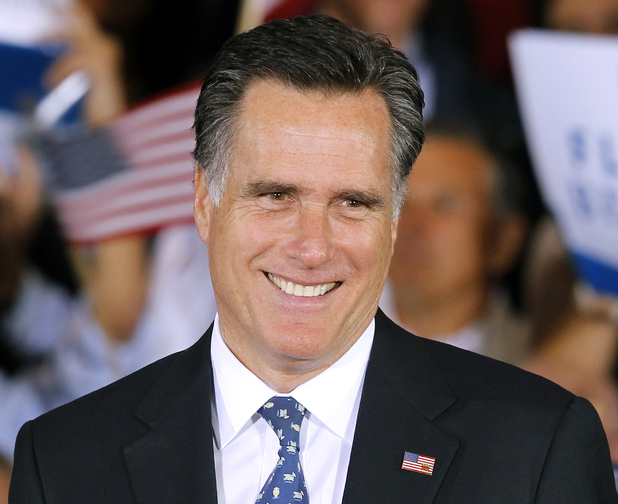
Mitt Romney, however, hasn´t show competence in neither of the aforementioned areas, in my opinion. For me, what he has shown is inconsistency of thought, distortion of information, shallow arguments and contradictory proposals. His main (and only) critique about Obama´s mandate was regarding the economy. Every time he mentioned that Obama was "going too slow with it,” I couldn´t help thinking, "so people from your party have caused the mess, left it to the Democrats to clean it up, and you complain they´re doing it too slowly?" I might not be fully informed about the economic crisis, but I imagine that fighting two wars at the same time has its share of guilt to the flourishing economy they have today. It is interesting how the opposition´s only argument was about the economy, and yet Mitt Romney couldn´t give a specific plan for how he would handle the problem. He can speak very beautifully, of course, about how the United States is a country blessed by God, that they are the most important nation in the world and how they are above any mundane law. But during the entire course of the campaign I didn´t see one valid argument for how he would conduct such an amazing country. Rather, he just gave contradictory and flawed plans, on how it was necessary to give more money to the army, but not raise taxes, how it was needed to build more jobs, but he is always supporting the richest part of the population. He has shown in more than one occasion arguments that opposed to something he had previously stated, and when asked about what happened to the former argument, he would deny ever saying such a thing. Another interesting aspect we have seen during the election was some of the arguments of “team Romney” people. Now, it would be a really good thing to vote for Romney if the opposing candidate was a “Muslim, Atheist and Communist.” That would really overcome Romney´s inconsistency. 


Now, how can a country like the United States (or any country, really) have a president who doesn´t stand by his word, changes his mind constantly and isn´t capable of giving one profound argument or plan to how he would conduct the country he claims to be capable of conducting? The United States is in a tough position, and they must admit it and try to change that. They can´t expect to continue doing the same thing and having the same standards they did before. Many of Obama´s policies might not be what the average American has in mind for their almighty country, but they match the situation they are in, and the sooner they recognise that, the more quickly they will recover. 

So, to answer the topic question, (I´ve gone out of topic, I think) to the rest of the world the re-election of Barack Obama means that we are going to have the next four years without any major wars or conflicts (involving the United States) and a slow but present growth in the economy. They will be very similar to the last four years, which in my opinion is a good thing. About me, I think the re-election of Barack Obama simply means all of the above, to the extent that if Mitt Romney had won, we might have another war, or some other crazy action being taken for a shallow or unjustified reason, and the world would be practically in the hands of a person whose all personality traits I have already given my opinion about. So, I am very happy with the results of the election, because not only the man I really didn´t want to win, lost and the man who I agree with won. 
Go, Barry Obama!


Tuesday, 23 October 2012

Time Management


 Assignment 2: Before the 9 Oct session, write a paragraph in which you reflect on the time management goals you set on 19/20 Sept.  In your paragraph, include whether or not you met your goals, any problems you had, any successes you had, and anything you learned.  Also include an updated version of your goals based on your experience.


We had a few classes about time management, and I think they were very useful. The results of the tests we took showed me I could manage my time fairly well, but I still have a lot to improve. I already use to do lists, and plan my time (though I usually do it as a form of procrastination rather than actually helping me plan my time- I'm working on that). I also "broke" down the work into pieces, so instead of doing one big assignment, I did a few things everyday and it made it look more possible and achievable.

We had several things to do the past week, so I tried using some of the skills we talked about in class. One of them was rewarding myself. It actually worked! I was surprised on how easily I could be manipulated by myself. We had to write an essay for BHG, and I told myself that if I wrote half of it, I could finish reading the book I was reading at the time- it worked. The next day I said that if I finished the essay, I could start reading the sequel. It worked just as well. Also for BHG we had to research on a topic of our choice and then write another essay about it. The rewarding system proved itself effective again.

Another thing I noticed during class that I need to work on is being more flexible. I always schedule my time to the very last detail, so if something comes up I usually get late with all of my assignments. I usually didn't do homework during the evenings, only the afternoons, for many reasons, but once I accepted I wouldn't have time to get everything done in the afternoons and started doing things at night, it suddenly became a lot easier and less stressful to finish everything I had to.

But the hardest thing to do is conquer procrastination, definitely. I think I am a good procrastinator, because I hide my procrastination in doing work. I tell myself I am "planning my time" but I spend way too much time doing that, to the point that I could have done half of the things I had to do in the first place, if I had started on time. I am trying to overcome that, but it's not easy. Since I have the "I'm planning my time" excuse, it's easier to fool myself. For this I am putting another learned skill in practice, trying to do the right thing at the right time.
There are some homework assignments that I really don't want to do, so I work on the not-so-bad assignments before, even if I would have more time to do them than the ones I really don't want to do. I think that is a general rule, when we have to study, even the most absurd things become more acceptable to do than actual studying.

Overall, I think I met my goals, but I still have a lot to work on. I think these following weeks will be very busy as well, and that will give me time to work on my time management skills too.


Sunday, 9 September 2012

College - Post 2

I know a number of people who had no idea what they were going to do in college until the very last minute. My father, for example: he was in the line to give his application to a Brazilian college and he still hadn't decided which course he was going to take. In my case, that is definitely not true. I already know what I want to do for college. Well, not exactly, but I have given the matter a whole lot of thought already. I know that I want to go to a university in the United Kingdom. My dream is Oxford, actually, but I know how hard it is to be accepted. I have been preparing as much as I can though. That is the reason why I came to ISC to begin with. I met a college recruiter in 2011 and he told me that the best way into Oxford was through an international school. At the time I didn't know about ISC, so we (my mother and I) thought I would have to move to São Paulo, so when we found out about ISC, we were quite relieved. I have also researched pretty much everything there is about colleges in the UK, (especially Oxford) and I am trying to follow all the steps necessary to be accepted.

My only concern is money. I don't know if I can afford studying abroad: colleges are really expensive. I have looked into scholarships, but it would still be very hard. Especially studying at ISC, since it is not exactly a "cheap" school and I can't save money for college. My parents told me that we will have to figure that out later, and I must do whatever I can to get a scholarship, but it still worries me. There are a few scholarships for international students, but the general price of the university tuition also increases: for Oxford, English students pay an average of 9,000 pounds a year, while international (overseas) students pay 12,000 pounds. Add that to living expenses and the college (accommodation) fee, it becomes a lot of money.

As far as a career is concerned I haven't made up my mind completely yet. I know I want to be an author, but that is not enough to live a comfortable financial life (as my father insists to point out) so I am considering every option (except for business: that is something I would definitely not be good at). One of the courses I considered taking was called "History and English" and you receive two diplomas, one in History, one in English. Those are two courses I would love to study, but there is again my father's financial aspect, so like I said, I am considering every option. That is the only thing I have not decided yet, and I know it is the most important aspect, but I know I will have four years to decide. It is a long way until college: I can't be 100% sure now what I will do for the rest of my life, so I believe it will take some time until I actually decided what I will do.

One important advantage US universities have over UK universities is the possibility of choosing a course whilst in college. In the universities I have researched about, you apply for a certain course, and you will be considered for that course, but you have to apply for a specific one. That makes life a lot easier, I have to admit. But the entry standards in UK universities are more of my profile than US universities, so I believe it will be easier for me to go to the UK. That is not the only reason I am planning on going there, but it matters a lot.

As far as being an academic leader, I believe that is a key point to being accepted anywhere, not only for college but also for jobs. Universities are looking for capable students who will contribute to their college somehow, and being a leader is extremely important. Most of us have so much to offer, we just need to know how to manage the usage of our ideas and how to get the most out of them. Not only that, but being an academic leader means being prepared to make a difference, to lead people to change and to new ideas and innovations, since that is the base of the world. So being an Academic Leader will help us achieve academic excellence, which is what colleges are looking for.


Sunday, 19 August 2012

Academic Leadership

The Academic Leadership course is new to us, and it prepares us to the International Baccalaureate course many students at ISC take during the last two years of High School. But not only that, Academic Leadership teaches skills that will help us during our entire lives. It will teach us to research, how to use our time well, and above all, it will teach us how to be good leaders. Since "all leadership is academic," it is a course to prepare students to be future leaders in whatever field they enter. It is combined with technology, so besides leadership, we will develop important technology skills for the modern world.

We have seen that very often people manipulate information to their advantage. It can happen for a number of reasons, depending on what will benefit the talker. We have seen an example of how the American candidate Mitt Romney has distorted the information contained in a book written by Jared Diamond. The book talks about the reasons why some countries are wealthy and some are poor. It is a very complete research and explores many possible causes. Mitt Romney changed the content in the book to his advantage, saying that the American people should believe in America, not because of geographic features, but because America is the greatest country in the world. He simplified Diamond's research in a way that benefited his speech and gave the public a wrong idea of what Diamond actually said. That made Diamond angry, of course, and the author published an article explaining what his book was about, and criticizing Mitt Romney's action. That kind of manipulated information is more common than imagined. Not only in politics, but in marketing, campaigns, and many other situations. People use any kind of information to their favor; they simplify it, they change it. All adapted to the public they want to reach. And the interesting part is that people actually believe them. If you say something with confidence, people are likely to believe you. Very few will take the time to think your argument through. It is important that the population has judgment, otherwise people that manipulate and abuse their academic knowledge (or lack of it), will be future leaders and the population will always be fooled and manipulated, like has happened in countless situations in History so far. Instruction is needed not only for the people in charge, to create academically sophisticated and intellectual leaders, but also to the population, so they will know whether they are being told the truth or not. With ignorant voters, corrupt governors will come to power and the population will always be lied to. That will cause a corrupt democracy, where life conditions are poor to the residents of the country, and the population is not respected. A factor that is treated in Jared Diamond's book about a country's wealth is an honest government. Intellectual capable people will make smarter choices when choosing future leaders. But for a country to develop, it does not depend solely in a capable voting population: it depends on capable leaders. If there is an intelligent population, but no leaders worth voting on, it won't make any difference. The leaders must be prepared and taught to use their academic knowledge in an honest way. If both the population and their leaders are honest, able to use information in the right way, and be prepared to fulfill their duties correctly, the country will move forward and society will be benefited.


Now, last but not least, (definitely not least), possible subjects that I would like to transform into a project in this class are either music or literature. I love both, and I haven't made up my mind yet. I am sure either one would make a good project, and I will have to make a decision at some point. But right now, I really don't know.